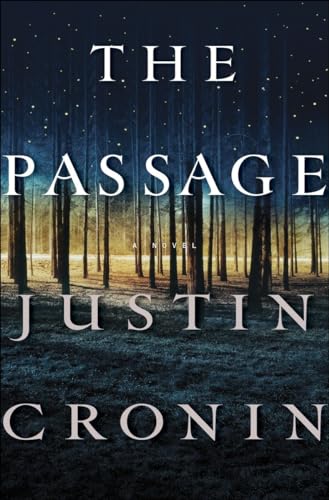
It’s summer in the northern hemisphere, and The Passage is everywhere. As I waited for my flight at LaGuardia Airport a month ago, headed north for a book tour, Justin Cronin talked about his book on Good Morning America on a screen above my head. The Passage waits for me, in stacks, at all the bookstores that I visit. Cronin’s readings draw enviably enormous crowds. The sheer scale of the marketing campaign inspires shock and awe: there is a Passage iPhone application, of all things, and not one but two wildly-expensive-looking websites.
All of this delights me — I haven’t read the book yet, but a majority of booksellers of my acquaintance seem to have loved it, and I like seeing good books and their authors celebrated. The Passage, in my understanding, concerns a post-apocalyptic world. A virus has turned most of the population into vampires; the few human survivors are hunted in a dark and hopeless landscape. In other words, this sounds like exactly the kind of thing I’ll enjoy reading.
I’ve long had an unhealthy interest in apocalypse. I seem not to be alone in this morbid fascination; every year new wastelands arise on screen and in fiction, bleak and ruined worlds with their own sets of rules, their own catastrophes and their own unique monsters. Perhaps there’s something about experiencing the end of everything that helps us confront our own mortality. Perhaps it’s a way of dealing with the unsettling truth that the end, all conspiracy theories and misinterpreted Mayan calendars aside, will eventually be nigh: even if we manage to escape nuclear annihilation or a pandemic, we orbit a star and stars have lifespans.
And on that bright note I present, for your consideration and summer reading enjoyment, a brief selection of my favorite fictional apocalypses.
1. The Gone-Away World by Nick Harkaway
This is one of my favorite books, and it concerns a disaster like none other in literature. “I am in hell,” the narrator of The Gone-Away World tells us. “I am in hell, and there are mimes.” The book is set in a world that has come apart at the seams. One or two of the best minds in science have devised a Go-Away bomb, the effects of which are difficult to describe in under two or three pages; the short version is that it makes things Go Away, in a capitalized, future-of-modern-warfare, vanished-from-the-face-of-the-earth-without-a-trace sense. But the fallout from the Go-Away bombs creates a vacuum in which the fears and dreams and nightmares of humans and animals are reified and come to life. This is a swashbuckling adventure story set in a dangerous and beautiful world, a surrealist post-war landscape where nightmares walk the earth. There are ninjas. Also, mimes.
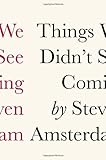
2. Things We Didn’t See Coming by Steve Amsterdam
The nature of the apocalypse is vague. The first story — this is a collection of interlinked short stories, reviewed elsewhere on The Millions — concerns a young boy on the night of Y2K, and the stories that comprise the rest of the collection afford us glimpses of his life in the changed world that follows. Is this an alternate reality wherein the projected disasters of Y2K came to pass? Perhaps. Cause and effect remain elusive, but the grid has gone down. Later there are plagues and torrential rainstorms, pervasive cancers and volcanoes, draconian bureaucracies and flocks of refugees. Everything, it seems, has gone wrong all at once.
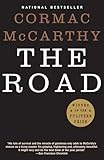
3. The Road by Cormac McCarthy
I loved The Road. I also loved Jacob Lambert’s hilarious send-up of it, but I loved The Road more. It seemed fashionable a few months ago to not love The Road, but what the hell, I thought it was good. A man and his child move through a world decimated ten years earlier by an unspecified catastrophe. It’s the bleakest apocalypse I’ve come across in literature. Most apocalypse narratives, I’ve noticed, make it easy to imagine surviving the disaster; you imagine you’d probably be among the luckier refugees in Things We Didn’t See Coming, among the survivors of the Go-Away War; but McCarthy presents a world that seems not just unsurvivable, but like a place you might not actually want to survive.
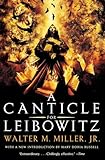
4. A Canticle for Leibowitz by Walter M. Miller, Jr.
I came across this book nearly a decade ago, and was surprised to realize just now that I no longer own a copy. It’s a strange and entrancing story, the only novel that Miller published in his lifetime. The book begins in the dark ages of the 26th century, six hundred years after a global nuclear war has destroyed civilization. Illiteracy is nearly universal, but a small order of monks in Utah is dedicated to the preservation of half-understood books hoarded by their founder in the 20th century. The novel spans over a thousand years and reads as a parable of human folly: in 3174 a new Renaissance is underway, and electricity has been re-discovered; in 3781 there are once again nuclear weapons, and rumors of war.
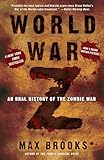
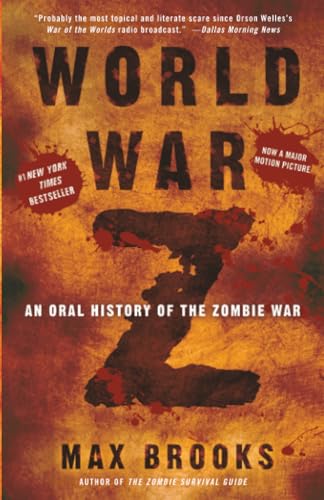
5. World War Z by Max Brooks
I’m generally not a fan of zombie fiction, but I picked this up in McNally Jackson in New York one day when I had some time to kill before a downtown appointment. Nearly a hundred pages later I was still reading on a bookstore chair. World War Z is presented as an oral history of the zombie war. An unnamed interviewer travels the world, interviewing survivors of the apocalypse: a pilot who went down over a heavily infested area of the United States while transporting supplies between safe zones, a member of a Chinese submarine crew who watched the end of the world through a periscope, a warrior monk from the evacuated islands of Japan. It’s scarily captivating.

at 9:35 am on July 8, 2010
Though sharing a similar premise with A Canticle for Leibowitz, Russell Hoban’s novel Riddley Walker is really the most innovative and gripping piece of post-apocalyptic fiction I’ve read.
at 11:31 am on July 8, 2010
I’d like to add “Far North” by Marcel Theroux which was quietly shortlisted for National Book Award last year. Much different than your typical post-apocalyptic fiction but still gripping in its own right.
Don’t forget Margaret Atwood’s trilogy either (2/3 of the way there anyway).
at 3:17 pm on July 8, 2010
Not my usual reading but some get through every now and then. Totally agree with Joe about Ridley Walker. I read it decades ago and now I will read it again since my brain has been reminded. What I remember most vividly is that it is told in a language that is almost-English. Took getting used to but then it was second nature.
Another oldie is John Christopher’s A Wrinkle in the Skin aka The Ragged Edge. An antecedent for The Road. From mid-60s.
Atwood’s The Handmaid’s Tale–the world is still peopled but the bad guys won and women pay the price. She calls her novels of this type speculative fiction. I’ve seen it elsewhere and wonder if she coined the phrase.
Planet of the Apes by Pierre Boulle–just forget Charlton Heston (yuck)–the book is really good. and On the Beach by Nevil Shute–very popular in its day. The ending of the movie is what stays with me.
at 4:04 pm on July 8, 2010
Oh, I was hoping this would happen in this comment thread. Thank you for all these great recommendations.
at 4:17 pm on July 8, 2010
Great list! One of my favorites, not listed here, is still Earth Abides by George R. Stewart.
at 4:27 pm on July 8, 2010
I am a post-apocalyptic fiction aficionado, so thanks for a couple of new-to-me suggestions in the list above. It seems, based on your selections, that you might also enjoy Amnesia Moon, an early novel by Jonathan Lethem. Another surreal take on the post-apocalypse is Civilwarland in Bad Decline by George Saunders.
at 5:59 pm on July 8, 2010
John Christopher wrote a number of fine apocalypic stories — No Blade of Grass is another example.
Amnesia Moon is not only a good apocalyptic novel, it’s a fine homage to Philip K. Dick, who strongly influenced Lethem’s early career.
From within the sf genre, Octavia Butler wrote much good apocalyptic fiction — “Parable of the Sower,” “Parable of the Talents.”
at 7:00 pm on July 8, 2010
Readers might want to know about The Great Bay: Chronicles of the Collapse by Dale Pendell. It was just released this week and won the 2010 Green Book Festival Award for Science Fiction.
at 7:29 pm on July 8, 2010
I really recommend War Day!!!
at 8:51 pm on July 8, 2010
Don’t forget Dhalgren by Samuel Delany. Not necessarily about the apocalypse and definitely not an easy read but very apocalyptic nonetheless. Reading it immerses you in the post-civilized city of Bellona and conjures uncomfortable and surreal feelings that devastation too can be personal, localized, seemingly inescapable as the rest of the world chugs along.
at 10:38 pm on July 8, 2010
Alas, Babylon. 50s era take on the atomic apocalypse. The precursor for so many that followed.
at 11:39 pm on July 8, 2010
+1 for “A Canticle for Leibowitz”…best book ever.
I’d also add Nebula award winning author Paolo Bacigalupi’s “Pump Six and Other Stories,” while not all are post-apocalyptic, many are and they are great. Here’s a free sample story: http://windupstories.com/pumpsix/the-people-of-sand-and-slag/ . I recommend this collection over his more popular Nebula award winning book “The Windup Girl“.
at 7:13 am on July 9, 2010
[...] Millions has put together a list of five apocalypse novels you should read this summer (or at least before [...]
at 11:46 am on July 9, 2010
I’d like to double-down on the recommendation for Earth Abides by George R. Stewart. A wonderful book. And another one, that certainly seems as if it must have served as inspiration for the submarine portion of World War Z, is On the Beach by Nevil Shute.
at 2:07 pm on July 9, 2010
[...] Millions provides a list of five apocalypses to get you through your summer, once you’ve finished The Passage. Two of the suggestions [...]
at 6:06 pm on July 10, 2010
[...] The Millions, here is one of those lists, Emily St. John Mendel’s “Five Apocalypses: A Particularly Catastrophic Summer Reading List,” in which she features the post-apocalyptic masterpieces that should be required reading for those [...]
at 6:08 pm on July 10, 2010
What a great list. My personal choices to add would be Amnesia Moon and War Day.
at 8:02 am on July 11, 2010
[...] Emily St. John Mandel compiles a summer reading list of apocalyptic novels. [...]
at 4:45 pm on July 11, 2010
[...] Five Apocalypses: A Particularly Catastrophic Summer Reading List Is there a more perfect reading theme on a hot, sunny summer day than the end of the world, or of modern society at the very least? As a young preteen, I was sucked in by the Tomorrow, When the War Began series and several years later shivered despite the heat as I read Nevil Shute’s haunting On the Beach. [...]
at 7:47 am on July 12, 2010
I’d like to add Blindness by Jose Saramago, reviewed here: http://www.jungla.co.uk/title/blindness/
Blindness becomes a contagious disease, and spreads across the country causing panic and fear. Survivors are trapped together and reliant on each other. A scary tale.
at 7:11 pm on July 12, 2010
I’m also a fan of post-apocalyptic literature. My favorite – Cloud Atlas by David Mitchell.
at 7:44 pm on July 13, 2010
I know Margaret Atwood’s already been mentioned, but man, is Handmaid’s Tale the best!
Great essay/list, Emily.
at 1:17 pm on July 14, 2010
More dystopian rather than apocalyptic, but I recommend “The Space Merchants” AKA “Gravy Planet” by Frederick Pohl and C. M. Kornbluth.
at 12:51 am on July 19, 2010
Riddley Walker – by Russel Hoban of The Mouse and His Child. The Mouse and His Child is considered a children’s book and was made into an animated movie about broken discarded toys enslaved by rats.
I didn’t really understand Riddley Walker – back to the apocalyptic theme -but I was intrigued and would re-read passages because of the strange ‘feel’ of the book and the language. One day a friend came over with a theatre background and bits of it in a brogue. It was somewhat how enlightening Shakespeare can be when performed. It transforms when read aloud – at least some of the poems and children’s rhymes – all of them full of double entendres. Every time I look at this book, I seem to understand it from a different point of view. One feels as confused as if one were there – and only had the terrifying instinct to survive and nursery rhymes as a road map. A terrifying descent into ignorance.
at 5:49 pm on July 19, 2010
I really didn’t enjoy The Handmaid’s Tale. It’s not a gripping dystopian fantasy. There is no chilling image of the future, only a plodding diary entry riddled with plot holes.
There are no lasting discussion points, except to ask why this book has been so successful.
Jungla.
at 7:36 pm on July 23, 2010
[...] Apocalyptic Reads [...]
at 3:12 am on July 28, 2010
[...] St. John Mandel over at The Millions observes that post-apocalyptic fiction seems to be everywhere this summer, and I couldn’t [...]
at 12:23 am on August 9, 2010
Two more for the road (as it were):
The Passage, by Justin Cronin.
The Wind-up Girl by Paola Baciagaluppi …
Both great reads, and very imaginative reworkings of the apocalyptic genre.
Could probably also count Daniel Suarez’ excellent Daemon and its sequel Freedom(TM) as a somewhat optimistic computer version of the post-everything concept. .
Good reads one and all.
at 10:33 pm on August 9, 2010
“The Handmaid’s Tale” is truly chilling, but I seem to recall a postscript of a hundred years later, where sanity had been restored, and the period of the story was a minor historical sidelight for those zany Americans.
In “Oryx And Crake”, there’s no happy follow on, just the forever horrors of arrogance and technology gone mad.
Margaret Atwood is the best at this sort of work, it doesn’t take sci -fi, or impossible technologies, just smart people being the worst we have to offer. Her books are so scary because they are so doable.
at 11:33 am on August 10, 2010
I didn’t see “Farmhams Freehold” listed. W”onderful !!! I second most of what was listed, but couldn’t get into Atwood’s “The Handmaid’s Tale” for some reason. Liked “Oryx and Crake” better. All the rest were really great.
at 11:46 am on August 10, 2010
Oops spelling error! That’s Farnham’s Freehold, by Robert Heinlein.
Also another novel that I haven’t seen on these lists are the truly and deeply unnerving “Level 7″ Both Heinlein’s work and “7″ are post nuclear and both are excellent.
at 5:26 pm on August 10, 2010
also check out “Footfall” by Larry Niven and Jerry Pournelle. One of my all-time faves! Great end-of-world scenario. And it wasn’t our fault!
at 7:44 pm on August 10, 2010
What about Lucifer’s Hammer or The Stand by Stephen King.
at 3:05 am on August 31, 2010
“Nature’s End”, by Whitley Strieber and James Kunetka, very smart, very depressing, a classic in that paranoid psychotic way that Strieber gets, highly recommended!
A Year in Reading 2009, 2008, 2007, 2006, 2005
Best of the Millennium; Readers' List
A new way to browse The Millions! Books and Reviews
Bookmark these links to stay on top of the hottest books:
Hot 100 | Awards | Movers & Shakers | Bargain Books | Kindle Bestsellers
More From Lists
Other Recent Articles
Recent Comments
2009, 2008, 2007, 2006, 2005
Readers' List
© Mmix The Millions. Some rights reserved. This work is licensed under a cc attribution-noncommercial-Sharealike 2.5 License.