Related Books:

Krin Gabbard has written on jazz, cinema, and psychoanalysis. His most recent book is Hotter Than That: The Trumpet, Jazz, and American Culture, published this year by Faber and Faber. He is currently writing an interpretive biography of Charles Mingus.
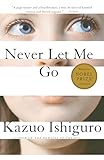 Few novels have grabbed me as much as Never Let Me Go by Kazuo Ishiguro. I was reluctant to read this author because of the Laura Ashley movie that his previous novel, The Remains of the Day, had been turned into. But one day a friend whose opinions I value handed me a copy, so I thought I’d give it a tumble. The novel takes its title from a beautiful song by Ray Evans and Jay Livingston, recorded most memorably by the great jazz pianist Bill Evans. The narrator of the novel has special feelings about this particular song, so if you know it, the book has even more power.
The premise of Never Let Me Go sneaks up on you as slowly as do the characters. Early on you realize that the narrator is recalling a childhood in an exclusive private school where none of the students seem to have parents. By the halfway mark, it is clear that they are all test-tube babies, produced solely for the purpose of providing organs for people deemed more worthy by British society. Ishiguro tells you that each clone makes four donations, but he inspires a measure of grim speculation because he never tells you what those donations actually are. He does tell you that after the fourth donation the donor is usually little more than a vegetable if he or she survives at all.
The book takes place in the present, and because the sci-fi element is never played up, you mostly find yourself assessing the entirely reasonable thoughts of the main characters. I think that’s what most stays with me. How these perfectly normal people – who are capable of love, pettiness, and even cruelty – live in a world where they are regarded as utterly disposable. At the same time, I admire the book’s wide-open allegorical resonance. Is the reaping of organs from cloned humans actually about slavery, about the caste system, about late capitalism, about the fleeting nature of human existence? These and multiple other interpretations are readily available, and yet that’s not what the book is really about. Several months after reading it, I still think about the rich, inner lives that the doomed characters nevertheless lead.