Judy wrote in with this question:
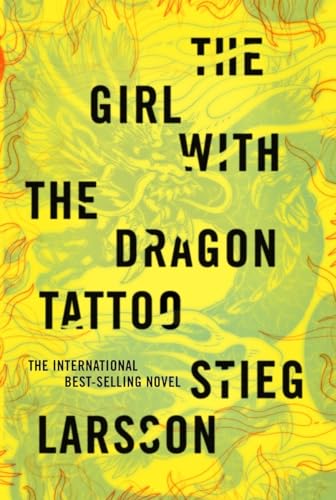
What is a “closed room mystery?” I came across this term in the blurbs for the ARC of The Girl With the Dragon Tattoo by Stieg Larsson, which I have been assigned to read for a certain project.I googled the term and got some hints, such as that all the suspects are in one room, but not an actual definition. The term is used in all kinds of reviews and critcism and I would like a definitive definition, if you know what I mean.
Judy, imagine you and five other writers are at a retreat on a remote estate working on your books, and then, one day, promising young novelist Jonathan Foster Gatsby turns up dead. As you and the other four remaining residents of what is now seeming like an awfully remote piece of real estate stand over the body, a chilling fact dawns on you and your colleagues: everyone in the room is the suspect. Luckily you have a knack for detective work, and following a few clues (and sidestepping a couple more dead bodies), you determine that it was the soft-spoken Zelda Eyre that did it.
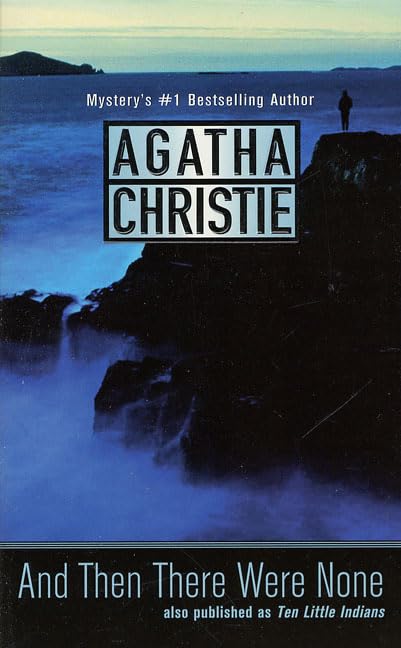
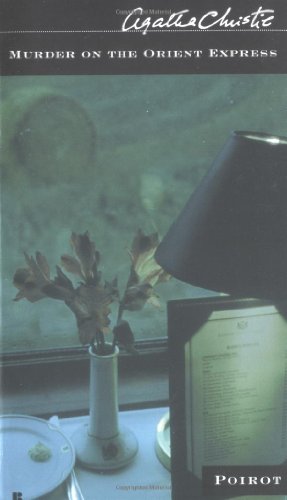
That is a very hasty and very silly example of a “closed room mystery.” Essentially, from the moment the mystery commences, every character in the book is a suspect, and typically some form of isolation precludes the notion that the culprit came from outside this group. Millions contributor Emily suggests some examples: [Agatha Christie's] Murder on the Orient Express or And Then There Were None (originally titled Ten Little Indians) or the boardgame Clue.
at 1:08 pm on August 16, 2008
Fascinating. So it simply means a mystery in which the pool of suspects is limited to a circumscribed set of people. A question: this would seem to describe virtually all British mysteries of a certain era — is that what is intended? Or must the border separating the suspects from the external world be very strong. I guess you could say that many British mysteries of this type are de facto closed-room mysteries?
Also: Not to be confused with a "locked-room mystery," in which the body is found in a room locked from the inside, the purpose of the book largely being to disclose how it was accomplished.
at 12:44 pm on August 17, 2008
Thanks again to C Max (can I just call you Max?) for a succinct and entertaining answer to my book question. I figured that Clue would be in there; a game that I played obsessively for a few years of my childhood. Now I can read The Girl With the Dragon Tattoo and still make my deadline.
at 6:56 am on August 18, 2008
I never did trust that Zelda Eyre. She had shifty eyes.
at 10:17 am on August 18, 2008
The original title of And Then There Were None wasn't Ten Little Indians, it was something even less PC. See the original cover at Wikipedia.
at 10:36 pm on August 18, 2008
Ew. James, thank you for that enlightening and troubling bit of trivia. Reminds me that "Eenie, meenie, miney, moe", in the same line, didn't used to be about catching tigers by the toe.
They were definitely Indians though in the 1965 movie version. And no matter who the "10 little" rhyme is talking about, it's rather perverse.
at 5:18 am on August 19, 2008
Invariably these mysteries are somehow stale.
Best of the Millennium; Readers' List
A new way to browse The Millions! Books and Reviews
Bookmark these links to stay on top of the hottest books:
Hot 100 | Awards | Movers & Shakers | Bargain Books | Kindle Bestsellers
Subscribe to RSS feeds for new releases: Literary fiction (for Kindle) | Biography | Graphic Novels | Food | History | Nonfiction | Science | Travel | New Release RSS Feeds for Movies, Music and More
More From Ask a Book Question
Other Recent Articles
Recent Comments
2010, 2009, 2008, 2007, 2006,
2005
Readers' List
© Mmix The Millions. Some rights reserved. This work is licensed under a cc attribution-noncommercial-Sharealike 2.5 License.